


Commercial-Grade Outdoor Umbrella: Sturdy Aluminum Frame for Markets & Events
Introduction
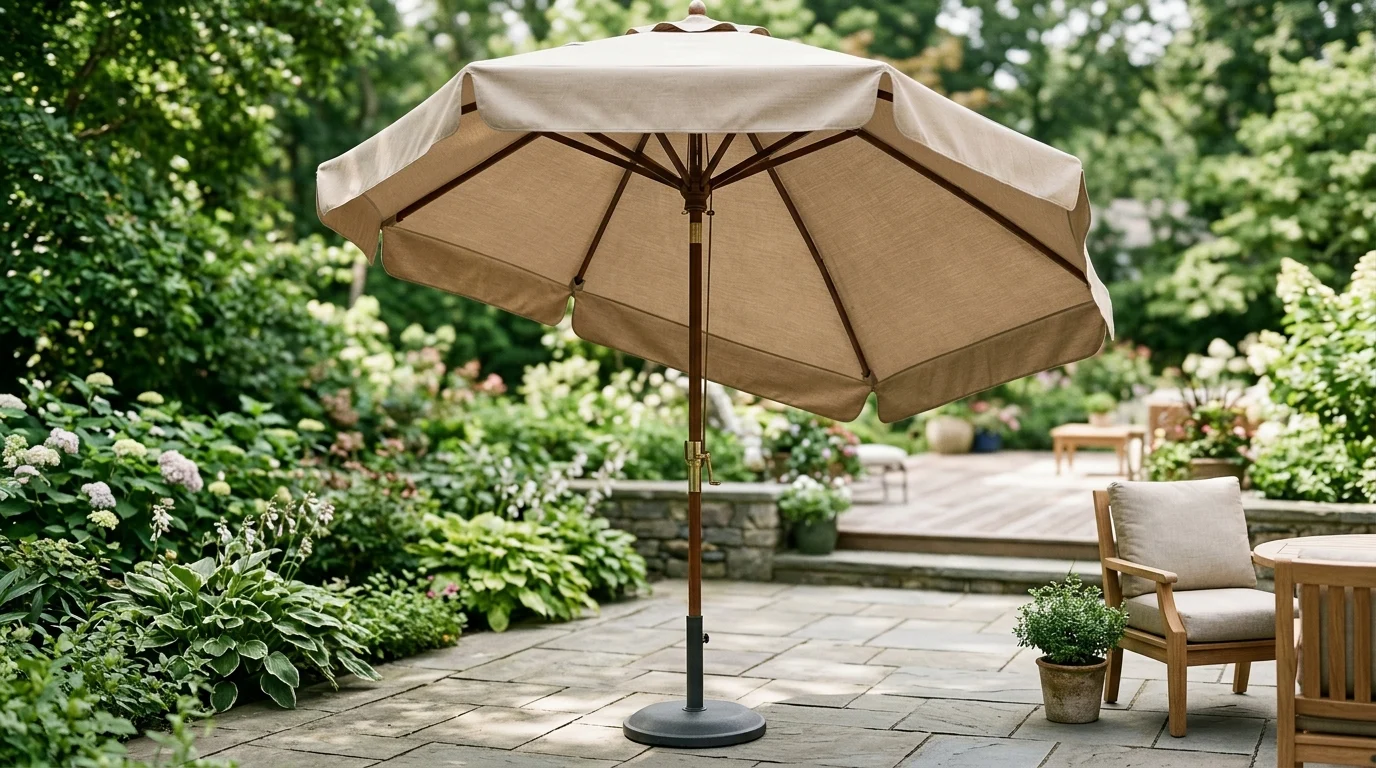
Choosing shade for a public venue involves more than size and appearance. In markets, cafés, and event spaces, an Outdoor Umbrella must handle constant use, changing weather, and repeated setup without becoming a maintenance problem. This article explains what separates a commercial-grade model from a residential one, with a focus on sturdy aluminum frames, canopy durability, and the performance standards that matter in high-traffic settings. You’ll see which materials and construction details improve stability, safety, and service life, making it easier to evaluate options for reliable long-term use.
Why Commercial-Grade Outdoor Umbrellas Matter
Procuring reliable shade structures for commercial environments demands rigorous attention to material engineering and structural integrity. For hospitality venues, municipal markets, and large-scale event spaces, the deployment of a commercial-grade Outdoor Umbrella is not merely an aesthetic choice, but a critical operational requirement. Standard residential models inevitably succumb to the mechanical stress and environmental degradation inherent in high-traffic public areas, leading to premature structural failure, increased replacement cycles, and elevated liability risks for facility operators.
How to define a professional outdoor umbrella
Defining a professional-grade unit requires looking beyond basic dimensions to evaluate specific material tolerances and performance metrics. A true commercial Outdoor Umbrella features a canopy constructed from solution-dyed acrylic or high-density marine-grade polyester, weighing between 280 and 320 Grams per Square Meter (GSM). This fabric density ensures a UPF 50+ rating, blocking 98% of harmful ultraviolet radiation while resisting rapid color degradation over extended seasons. Furthermore, the central mast and structural ribs must exhibit exceptional tensile strength. This is typically achieved through extruded aluminum with a minimum wall thickness ranging from 2.0mm to 3.0mm, contrasting sharply with the 0.8mm to 1.2mm thickness common in consumer-grade alternatives.
Which operating conditions require a sturdy aluminum frame
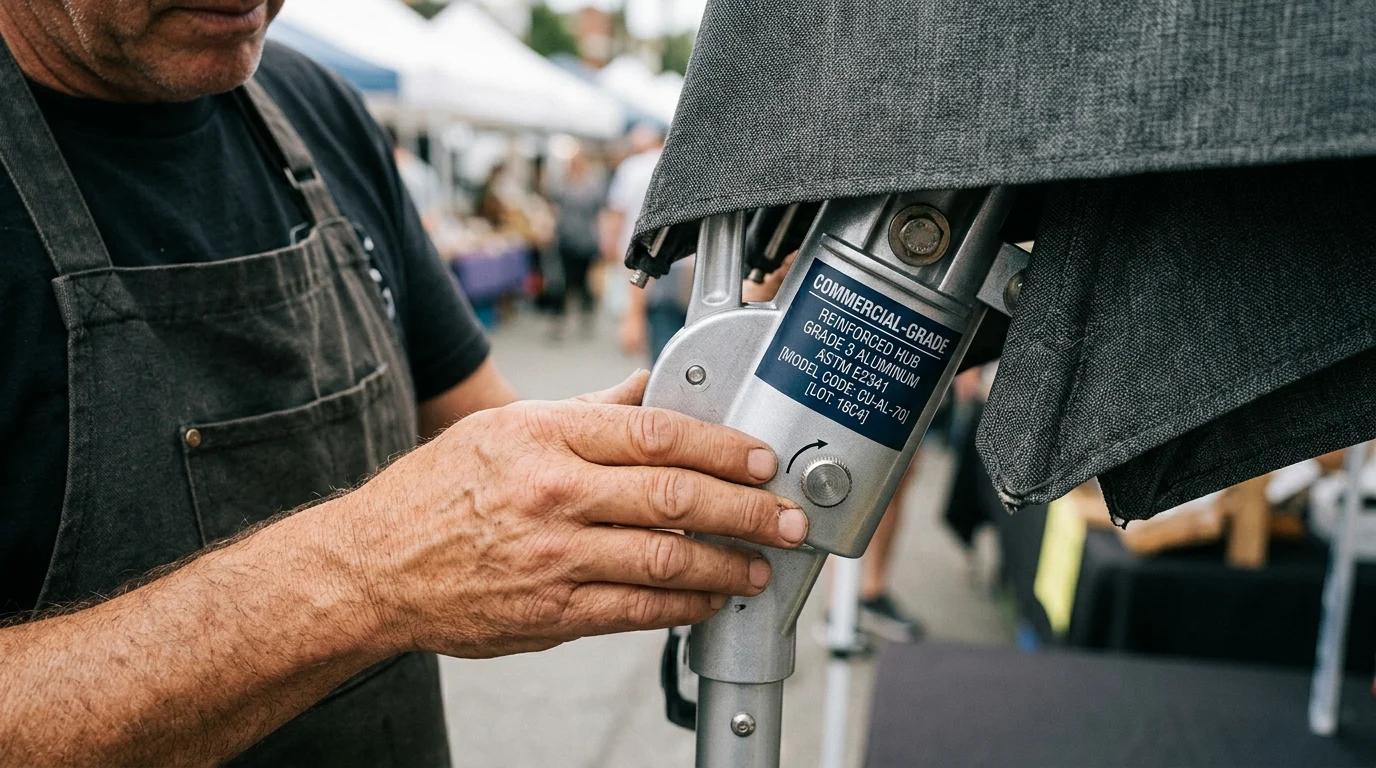
Specific operating conditions dictate the absolute necessity of a robust aluminum frame over wood or fiberglass alternatives. Coastal hospitality venues face relentless exposure to saline moisture, which rapidly corrodes untreated steel and rots organic materials. Marine-grade anodized aluminum provides an impermeable oxide layer that prevents galvanic corrosion even in constant salt-spray environments. Additionally, high-altitude patios or open-market plazas frequently experience sudden microbursts and sustained aerodynamic loads. A structurally reinforced aluminum frame, equipped with heavy-duty hub assemblies and reinforced strut joints, is engineered to withstand dynamic wind gusts of 40 to 50 miles per hour (64 to 80 km/h) without suffering permanent plastic deformation or catastrophic mast failure.
Key Specifications and Comparison Criteria
Establishing a standardized matrix of specifications is paramount for procurement officers evaluating multiple vendors. By isolating individual component metrics, organizations can accurately project the lifecycle, safety parameters, and maintenance overhead of their shade infrastructure before committing to large-scale capital investments.
Which frame, canopy, base, and wind-resistance specs matter
The critical specifications encompass the frame alloy, canopy durability, base weight ratios, and engineered wind resistance. For the frame, aerospace-grade 6063-T5 or 6061-T6 aluminum alloys are preferred due to their superior yield strength. Canopy specifications must mandate a minimum of 1,500 to 2,000 hours of continuous UV exposure resistance before noticeable fading occurs, alongside a hydrostatic head rating exceeding 500mm for adequate water resistance during sudden downpours. Base specifications are equally vital; safety standards dictate a minimum base mass of 100 pounds (45 kg) for a standard 9-foot (2.7-meter) canopy to prevent tipping under lateral wind pressure. Finally, wind-resistance ratings must be validated through aerodynamic wind tunnel testing, ensuring the deployment mechanism and central hub remain stable under dynamic loads.
How comparison tables clarify product trade-offs
Utilizing comparison tables allows buyers to visualize the stark differences between market tiers and make informed capital allocation decisions. The following table illustrates the performance trade-offs between various structural classifications used in the hospitality sector.
| Specification Metric | Commercial Aluminum | Commercial Wood | Residential Aluminum |
|---|---|---|---|
| Pole Wall Thickness | 2.0mm - 3.0mm | Solid Hardwood | 0.8mm - 1.2mm |
| Canopy Density | 300 GSM Acrylic | 250 GSM Polyester | 160-180 GSM Polyester |
| Max Wind Rating | 45-50 mph | 30-35 mph | 15-20 mph |
| Hardware Material | 316 Stainless Steel | Brass / Zinc Alloy | Plastic / Mild Steel |
| Est. Lifespan | 5 - 8 Years | 3 - 5 Years | 1 - 2 Years |
This data highlights why an Umbrella engineered with commercial aluminum specifications offers a superior return on investment despite requiring a higher initial unit cost.
How to Source and Select the Right Outdoor Umbrella
Navigating the global supply chain for commercial shade structures requires a methodical approach to vendor qualification and lifecycle cost analysis. Procurement professionals must move beyond transactional purchasing to establish strategic sourcing protocols that guarantee consistent quality, regulatory compliance, and long-term operational viability.
What steps procurement teams should follow
The sourcing workflow should begin with strict vendor qualification, ensuring manufacturers hold ISO 9001 certifications for quality management systems. Procurement teams must request physical prototypes to conduct destructive and non-destructive testing, specifically verifying the inclusion of 316 marine-grade stainless steel hardware and the micrometer-verified thickness of the anodized finish. Furthermore, buyers must negotiate favorable Minimum Order Quantities (MOQs), which typically range from 50 to 150 units for custom-branded or Pantone-matched canopies. Evaluating the manufacturer's warranty policies is also critical; a reputable commercial supplier should offer a minimum 3-to-5-year warranty on structural components and canopy colorfastness, providing a necessary financial safeguard against latent manufacturing defects.
Which criteria best balance total cost and performance
Balancing total cost of ownership (TCO) with performance requires analyzing both Capital Expenditures (CAPEX) and Operational Expenditures (OPEX). While a commercial aluminum unit may require an initial CAPEX of $350 to $500, its 6-year lifespan yields an annualized cost of approximately $58 to $83 per unit. Conversely, a $150 residential unit that fails annually results in a recurring annualized cost of $150, alongside the unquantifiable costs of facility downtime and potential liability from structural failure. Furthermore, selecting modular designs where individual components—such as ribs, hubs, and canopies—can be replaced independently reduces long-term OPEX by up to 40% over the asset's lifecycle. Prioritizing these criteria ensures that the selected shade infrastructure delivers maximum durability, patron safety, and financial efficiency for enterprise applications.
Key Takeaways
- The most important conclusions and rationale for Outdoor Umbrella
- Specs, compliance, and risk checks worth validating before you commit
- Practical next steps and caveats readers can apply immediately
Frequently Asked Questions
What makes a commercial outdoor umbrella different from a residential model?
Commercial models use 2.0–3.0mm aluminum frames, denser 280–320 GSM canopies, and stronger hubs for daily public use, wind, and longer service life.
Why is an aluminum frame better for markets and event spaces?
Marine-grade aluminum resists rust, handles repeated setup, and withstands gusts better than lighter residential frames, making it practical for busy outdoor venues.
What canopy fabric specs should buyers look for?
Choose solution-dyed acrylic or marine-grade polyester around 280–320 GSM with UPF 50+ and strong fade resistance for reliable shade and longer color retention.
How heavy should the base be for a 9-foot outdoor umbrella?
A 9-foot commercial umbrella typically needs at least a 100 lb (45 kg) base to improve stability and reduce tipping risk in open, windy areas.
Can Seasons Touring Products help with commercial umbrella sourcing?
Yes. Seasons Touring Products offers commercial Outdoor Umbrella options and product details to compare frame strength, canopy materials, and application suitability for events and hospitality use.